You went to sleep feeling fine. You wake up and your neck is locked — turning your head to the right feels like you’re trying to rotate a rusted bolt. Sound familiar? You’re not alone. Morning neck stiffness is one of the most common musculoskeletal complaints among adults, yet most people accept it as a fact of life rather than a solvable problem.

It isn’t inevitable. In the vast majority of cases, waking up with a stiff neck has a clear mechanical cause — and an equally clear mechanical fix. This guide breaks down the anatomy of morning stiffness, identifies the five most common root causes, and explains the evidence-based solution that stops it from coming back.
The anatomy of morning neck stiffness

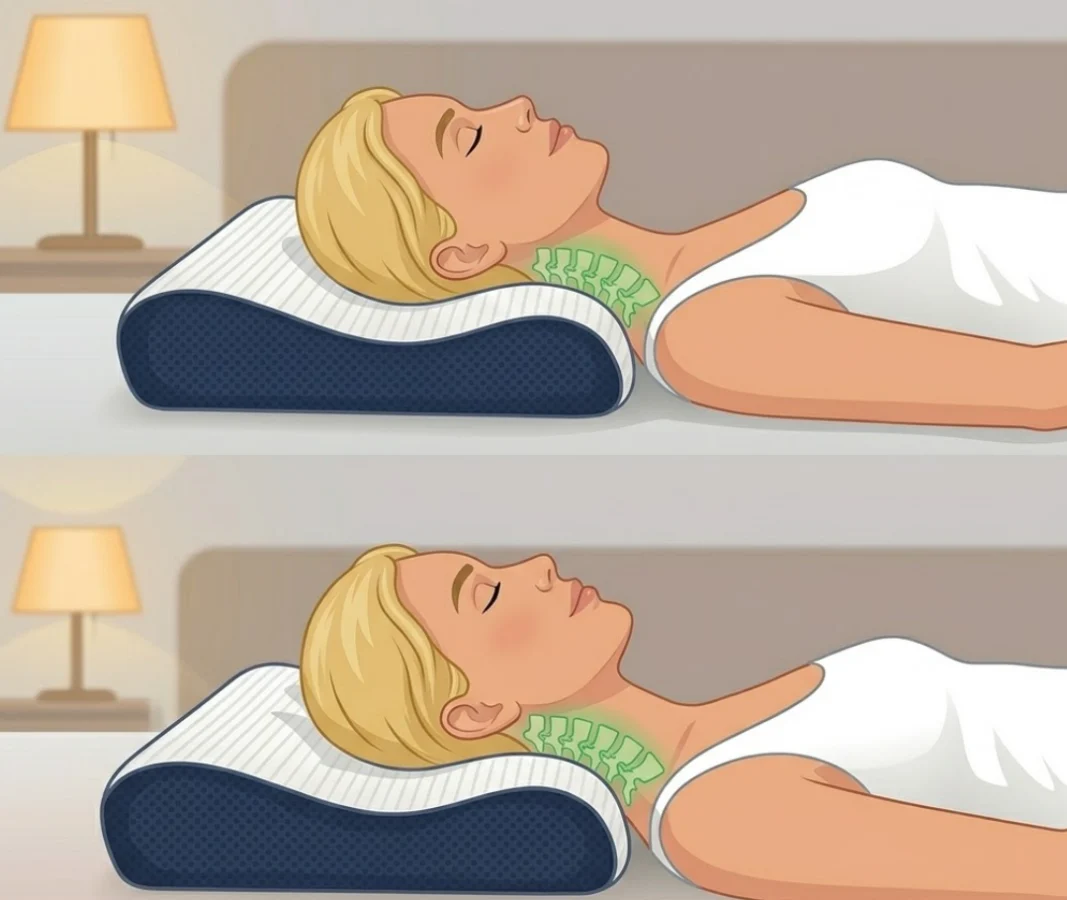
Your cervical spine — the seven vertebrae of your neck — relies on a precise natural curve called the cervical lordosis. When you’re standing or sitting correctly, this inward curve distributes mechanical load evenly across your intervertebral discs and keeps the surrounding musculature in a relaxed, neutral state.

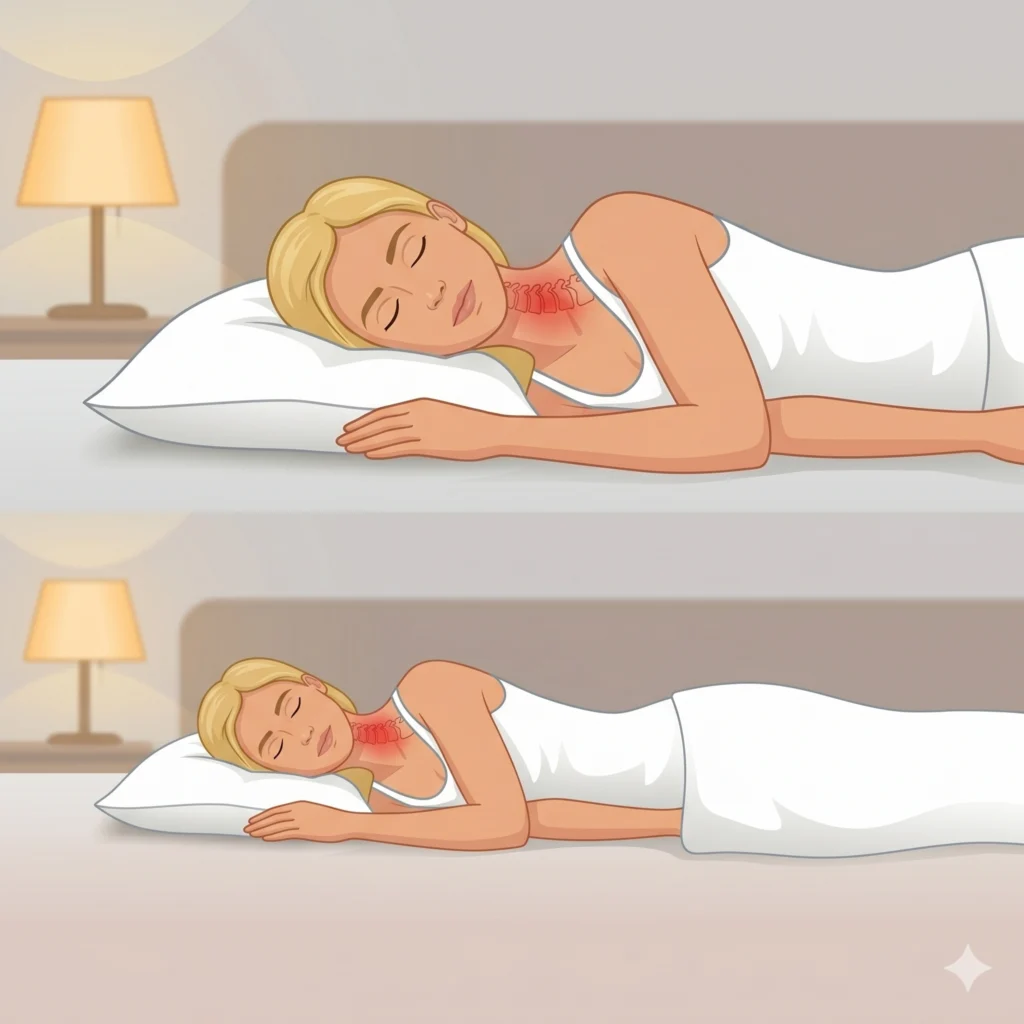
During sleep, you spend 6–9 hours in a single sustained position. If your pillow doesn’t replicate the support your muscles would otherwise provide while you’re upright — specifically, filling the space between your neck and the mattress — your cervical muscles must contract isometrically all night to prevent your head from pulling your spine out of alignment.

Isometric contraction without blood flow leads to lactic acid accumulation, micro-inflammation, and restricted range of motion when you wake. That’s morning stiffness: not an injury, but a recovery failure caused by a support deficit during sleep.

The 5 most common causes

The 5 most common causes

  • 1. Wrong pillow loft for your sleeping position. Side sleepers need a higher loft (4–5″) to bridge the gap between shoulder and ear. Back sleepers need a lower loft (3–4″) to maintain the natural cervical curve. Most people use the wrong loft for their primary position.
  • 2. Pillow that collapses during the night. Fibre-fill and low-density foam flatten under sustained head weight, removing support mid-sleep — the most common cause of waking in pain mid-night or early morning.
  • 3. Stomach sleeping. The only sleeping position that anatomically forces cervical rotation (your head turned 90° to one side). This stresses the facet joints and rotational muscles for hours at a time. If you sleep on your stomach, this is the first thing to change.
  • 4. Stress and jaw clenching. Bruxism (teeth grinding) and stress-related jaw clenching activate the masseter and temporal muscles, which share fascial connections with the cervical musculature. Jaw tension during sleep creates referred stiffness in the neck.
  • 5. Mattress incompatibility. A mattress that is too firm creates compensatory muscle tension in the shoulders, which travels directly up into the cervical spine. Mattress and pillow loft must be matched — a firmer mattress typically requires a lower-loft pillow.

What happens if you ignore it

Morning stiffness is your body’s early warning system. Left unaddressed, the cascade of consequences becomes progressively harder to reverse:

Weeks 1–4: Acute muscle soreness. Resolves with movement but returns every morning. Easy to fix at this stage.

Months 1–6: Chronic muscular tension develops. Trigger points form in the levator scapulae and upper trapezius. Headaches originating at the base of the skull become frequent. Requires physiotherapy alongside sleep hygiene correction.

6+ months: Postural adaptation begins. The cervical curve starts to straighten (“tech neck”), accelerating disc degeneration. At this stage, the problem extends beyond a pillow fix and requires clinical intervention.

Identifying and correcting the cause early is not just about comfort — it is about protecting the structural integrity of your cervical spine for the long term.

The evidence-based fix

The evidence-based fix

The single most effective intervention for sleep-related neck stiffness is switching to a contoured memory foam cervical pillow matched to your sleeping position. Here’s why the mechanism works:

A properly designed cervical pillow fills the “cervical gap” — the space between your neck and the mattress — actively replicating the support your muscles would otherwise need to provide. With the gap filled, your cervical musculature can achieve full relaxation during sleep rather than sustained isometric contraction.

The Spinovex™ Ergonomic Cervical Pillow is engineered specifically for this: a dual-height contour (4.5″ side edge / 3″ centre) accommodates both side and back sleeping positions, while the medical-grade 4.5 lb/ft³ memory foam density adapts to your specific spinal curve without bottoming out or overheating. The result is full cervical muscle recovery during sleep — morning stiffness eliminated at the root cause, not masked.

Stop the morning stiffness — for good

The Spinovex™ Cervical Pillow is engineered to fix the root cause. 100-Night Risk-Free Trial — if it doesn't work, full refund.

Get my Spinovex Nekrelief Pillow