You haven’t even made coffee yet, and your neck already feels like it’s made of rusty hinges. If that’s your normal, you’re not alone — and the good news is you don’t need a gym session or a foam roller to loosen things up. Just five minutes, done right after you get out of bed, can make a real difference in how your neck feels by the time you sit down at your desk.
This routine is built specifically for people who spend their days hunched over a keyboard. It’s short enough to do before you’re even fully awake, and it targets the exact muscles that tighten up from a night of sleep plus a day of screen time.
Why Your Neck Pays the Price After a Day at a Desk
Desk work tends to pull the head forward and the shoulders up and in, a posture sometimes called “tech neck.” Over hours, that forward lean puts extra load on the muscles at the base of your skull and across your upper back, which is why so many desk workers feel tightness by midafternoon. If you want to understand exactly how screens contribute to this, our guide on tech neck and how screens strain your neck breaks it down in more detail.
That daytime strain doesn’t just disappear overnight. If your sleep posture isn’t supporting your neck’s natural curve, you can wake up already tight — and then head straight into another day of desk posture that makes it worse. We cover this cycle in why you wake up with a stiff neck and how to ease it.
Before You Begin: A Few Ground Rules
Stretching should feel like gentle release, never like pain. Keep a few things in mind as you go through this routine:
- Move slowly and smoothly — no bouncing or sudden jerks.
- Breathe normally throughout each stretch; don’t hold your breath.
- Stop immediately if you feel sharp, shooting, or radiating pain.
- If neck pain is severe, persistent, or comes with numbness or tingling in your arms or hands, check in with a doctor before starting any new stretching routine.
The 5-Minute Morning Neck Stretch Routine
Each stretch below takes about one minute. Do them in order, right after you get out of bed, while your muscles are still warm from sleep.
1. Chin Tucks (60 seconds)
Sit or stand tall. Gently draw your chin straight back, as if making a double chin, without tilting your head up or down. Hold for 3-5 seconds, release, and repeat for the full minute. This move helps counteract the forward-head posture that builds up from screen time.
2. Ear-to-Shoulder Stretch (60 seconds)
Let your right ear drop gently toward your right shoulder, keeping both shoulders relaxed and down. Hold for 15-20 seconds, then switch sides. Repeat two or three times per side to help loosen the muscles along the sides of your neck.
3. Slow Neck Rotations (60 seconds)
Turn your head slowly to look over one shoulder, hold briefly, then rotate to the other side. Keep the movement smooth and well within a comfortable range — this isn’t about reaching your limit, just easing tightness.
4. Shoulder Rolls (60 seconds)
Roll your shoulders up, back, and down in a slow circle for 30 seconds, then reverse direction. This can help release tension in the upper traps, the muscles that connect your neck to your shoulders and often feel tightest in desk workers.
5. Upper Trap Stretch (60 seconds)
Sit on one hand to anchor that shoulder down, then gently tilt your head to the opposite side, adding a slight chin tuck for a deeper stretch. Hold for 20-30 seconds per side. This is often the stretch that feels most relieving.
Make It a Habit: Tips for Consistency
The routine only helps if you actually stick with it, so make it as frictionless as possible. Try pairing it with something you already do every morning, like waiting for your coffee to brew or your phone to finish charging.
It also helps to address the other side of the equation: how you sleep. If your pillow isn’t supporting your neck’s natural alignment overnight, you’re fighting an uphill battle every morning. Our guide on how sleep posture affects spinal alignment explains why this matters as much as your daytime habits.
Support Your Neck Overnight, Too
Morning stretches work best when they’re not undoing eight hours of poor support. The Nekrelief Pillow is designed to support the natural curve of your neck while you sleep, so you’re starting each morning from a better baseline instead of playing catch-up with stretches alone.
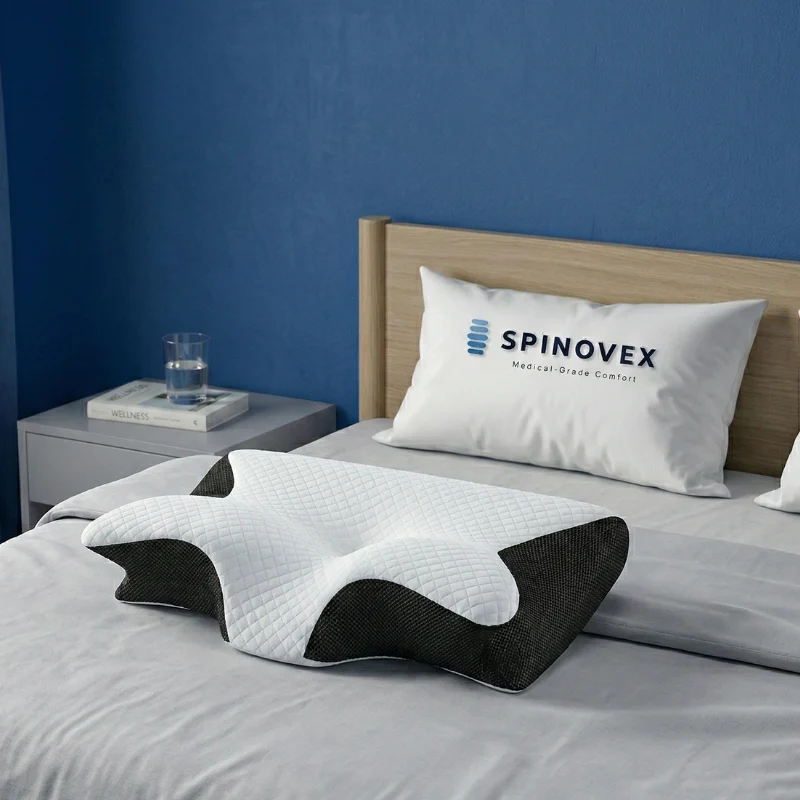
If you also deal with lower back tightness that shows up alongside neck stiffness, a Knee Pillow can help keep your hips and spine aligned overnight, which may help take pressure off the whole back and neck chain. Every Spinovex pillow comes with a 100-night trial, and US orders over $100 ship free, so there’s room to find what actually works for your body.
Frequently Asked Questions
How often should I do this neck stretch routine?
Daily is ideal, especially if you work at a desk. The muscles that get tight from screen posture tighten up again quickly, so consistency matters more than intensity. Five minutes each morning is far more effective than a longer session once a week.
Can neck stretches help with tension headaches?
Many people find that loosening tight neck and upper shoulder muscles reduces the frequency or intensity of tension headaches, since this muscle tightness is a common contributing factor. Stretching may help relieve the tension, but it isn’t a substitute for medical care if headaches are frequent or severe.
Is it bad to stretch my neck right away after waking up?
Not at all — in fact, your muscles are often more pliable right after sleep, before the day’s posture habits set back in. Just keep the movements slow and gentle rather than forcing a deep stretch immediately.
What if a stretch causes pain instead of relief?
Stop that stretch right away. Mild tension release is normal; sharp or radiating pain is not. If pain persists beyond a few days or worsens, it’s worth checking in with a doctor or physical therapist rather than continuing to push through it.
A Better Morning Starts the Night Before
Five minutes of stretching can genuinely change how your neck feels by midmorning, especially once it becomes a habit. But stretching works best as part of the bigger picture — alongside a sleep setup that actually supports your neck instead of fighting it.
If you’re curious whether your current pillow is part of the problem, the Nekrelief Pillow is backed by a 100-night trial, so you can test it through plenty of real mornings before deciding if it’s right for you.
This article is for informational purposes only and is not medical advice. If you experience persistent, severe, or radiating pain or numbness, please consult a healthcare professional.