You kick off the blanket. Ten minutes later you pull it back on. By 2 a.m. you’ve flipped your pillow to the “cool side” for the third time, and morning still arrives with that damp, restless feeling of never quite settling in. If this sounds familiar, you’re not imagining it — and you’re definitely not alone.
Sleeping hot isn’t just uncomfortable. It fragments sleep, making it harder to reach the deeper stages your body relies on to actually feel rested. The good news is that most overheating at night comes down to a handful of factors you can control: your room, your bedding, your pillow, and a few habits before lights-out. Let’s work through them.
Why You Run Hot at Night
Your body naturally drops its core temperature as part of falling asleep. When that heat has nowhere to go — because of heavy bedding, a warm room, or materials that trap warmth against your skin — your body has to work harder to cool itself, and that struggle often shows up as restlessness or waking up overheated.
Some people simply run warmer than others. Hormonal changes, certain medications, a warmer bedroom than your partner prefers, or even an old mattress and pillow that have lost their shape and started trapping heat can all play a role. Research generally suggests that a cooler sleep environment supports the body’s natural temperature drop, which is one reason cooling strategies tend to help so many hot sleepers at once.
Start With Your Sleep Environment
Before you buy anything new, look at the basics. Small environmental changes often make the biggest difference.
Dial In Room Temperature
Most sleep specialists point to a cooler bedroom — generally somewhere in the mid-60s to low-70s Fahrenheit — as more conducive to sleep than a warm one. If a thermostat isn’t an option, a fan, a cracked window, or simply switching to lighter blankets seasonally can help close the gap.
Choose Breathable Bedding
Tightly woven synthetic sheets trap heat against the body. Natural, breathable fabrics like cotton or linen allow more airflow and tend to feel cooler against skin. If you haven’t swapped your sheets out in a while, it may also be worth checking whether your pillow itself needs replacing — older pillows can lose their structure and start holding onto body heat rather than dissipating it.
Pick Pillow and Mattress Materials That Breathe
Not all memory foam is created equal when it comes to temperature. Dense, traditional foam can trap heat close to the neck and head, which is exactly where many hot sleepers feel it most. Look for pillows built with breathable covers and designs that allow airflow through the material, rather than foam that seals heat in.
This is one of the reasons we designed the Nekrelief Pillow with airflow in mind alongside ergonomic neck support — so you’re not choosing between a pillow that supports your spine and one that keeps you comfortable through the night. Every Spinovex pillow ships with a 100-night trial, so you have plenty of time to find out how it feels across different seasons and room temperatures.
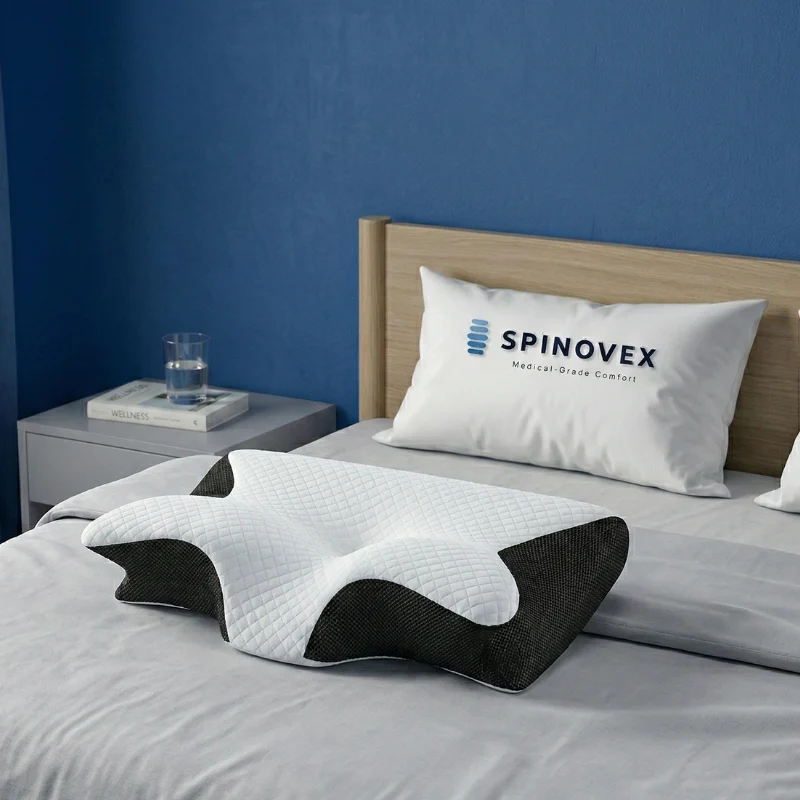
If you’re still sleeping on a pillow that feels dense, flat, or just generally warm against your neck, it may simply be past its prime. Our guide on washing and caring for a memory foam pillow can help you extend the life of the one you have while you decide on a replacement.
Sleep Position and Nighttime Tossing
Constant tossing and turning generates body heat on its own — every shift in position stirs up warm air trapped under the covers. Finding a stable, comfortable position you can settle into for longer stretches helps minimize that heat buildup.
Side sleeping tends to be a comfortable, spine-friendly default for many people, but it depends heavily on having the right pillow height for your frame. A pillow that’s too high or too low forces small adjustments all night long, which means more movement, more trapped heat, and more disrupted sleep. If you sleep on your side with your knees stacked, a bit of separation between them can also reduce overall restlessness — something our Knee Pillow is designed to support, back soon in stock for anyone who wants to try it.
Evening Habits That Help You Cool Down
What you do in the hour before bed matters almost as much as your room setup.
- Time your shower right. A warm (not hot) shower about an hour before bed can actually help — it raises your skin temperature briefly, which triggers a stronger cooling effect afterward as your body regulates back down.
- Skip heavy meals and alcohol close to bedtime. Both can raise your body temperature and disrupt the deeper stages of sleep.
- Dress for the temperature you want, not the one you have. Lightweight, breathable sleepwear makes a bigger difference than people expect.
- Block out light and reduce stimulation. A dark, calm environment supports your body’s wind-down process. A breathable Silk Eye Mask can help here too — silk is naturally breathable and feels cool against skin, unlike heavier synthetic masks that trap warmth around the eyes. Our guide to silk eye mask benefits covers more on why the material matters.
When Night Sweats Are More Than Just “Running Hot”
Occasional warm nights are normal, especially with seasonal changes or a warmer room. But if you’re regularly waking up drenched in sweat, dealing with disrupted sleep most nights, or noticing other symptoms alongside the heat, it’s worth talking to a doctor. Hormonal shifts, thyroid issues, certain medications, and other medical conditions can all cause excessive night sweats, and a healthcare provider is best positioned to identify the cause and recommend treatment. Pillows and bedding can support a cooler, more comfortable environment, but they aren’t a substitute for medical care when something more is going on.
Frequently Asked Questions
What’s the ideal bedroom temperature for hot sleepers?
Many sleep specialists suggest aiming for the mid-60s to low-70s Fahrenheit, though personal comfort varies. If you tend to run warm, err toward the cooler end of that range and adjust bedding weight rather than cranking the thermostat lower than feels sustainable.
Why do I sleep hot while my partner feels cold?
Body temperature regulation varies from person to person based on factors like metabolism, hormones, and even mattress or pillow materials on each side of the bed. Using separate lightweight blankets or breathable bedding on your side is often an easier fix than negotiating one shared temperature.
Can switching pillows actually help me sleep cooler?
Yes — pillow material has a real effect on how heat builds up around your head and neck overnight. A pillow with a breathable cover and airflow-friendly design, like the Nekrelief Pillow, is designed to reduce that heat buildup compared to dense, traditional foam.
Is memory foam bad for hot sleepers?
Not inherently — it depends on the specific foam and cover design. Older or lower-quality memory foam can trap heat, but modern designs with breathable covers and ventilated structures are made specifically to address that drawback while keeping the supportive contouring memory foam is known for.
Staying cool at night rarely comes down to one single change — it’s usually a combination of a cooler room, breathable bedding, a pillow that actually supports airflow, and a few mindful habits before bed. Start with the changes that are easiest for you, and build from there.
If your pillow is part of the problem, the Nekrelief Pillow is backed by a 100-night trial, so you can test it through a few different nights — and free US shipping kicks in on orders over $100 if you’re bundling it with other sleep essentials.
This article is for informational purposes only and is not medical advice. If you experience persistent, severe, or radiating pain or numbness, please consult a healthcare professional.