You land, grab your bag from the overhead bin, and realize your neck won’t turn past “barely.” That crick isn’t bad luck — it’s physics. A slack neck, a tilted head, and three hours of turbulence are a recipe for a sore morning after, even if your flight landed at night.
The good news: plane sleep doesn’t have to end in a stiff neck. With the right setup, a little strategy, and a few habits before and during the flight, you can actually rest instead of just passing out sideways against a window.
Why Plane Sleep Is So Hard on Your Neck
On a normal night, your pillow and mattress keep your spine roughly straight from your ears to your shoulders. On a plane, there’s no headboard doing that work. Your head either lolls forward, drops to one side, or rolls back with your mouth open — and gravity just keeps pulling it further out of line the longer you sleep.
Add a reclined-but-not-flat seat, a thin headrest, and dry cabin air that leaves your muscles tighter than usual, and you’ve got the perfect setup for waking up with a stiff neck. Research suggests that sustained, unsupported neck flexion for even an hour or two is enough to irritate muscles and joints that were already working hard to hold your head upright.
Choose Your Seat Strategically
Where you sit matters almost as much as what you bring. A few small decisions at booking can save your neck a lot of grief.
Window Over Middle, When You Can
A window seat gives you a surface to lean on and lets you control your own space, instead of negotiating elbow room with a stranger. If window seats are gone, an aisle seat at least lets you stretch out or get up without climbing over anyone.
Consider the Bulkhead or Exit Row
Extra legroom means you can sit back fully instead of hunching forward around your tray table, which keeps your head more aligned with your spine. Just check whether the seat reclines — some bulkhead and exit rows don’t.
Pack the Right Travel Pillow
A good travel pillow isn’t a luxury — it’s the difference between your head resting in one spot and your head swinging freely every time the plane hits a bump. Look for support on the sides (so your head doesn’t drop sideways) and under the chin or back of the neck, not just a soft ring that collapses the moment you lean on it.
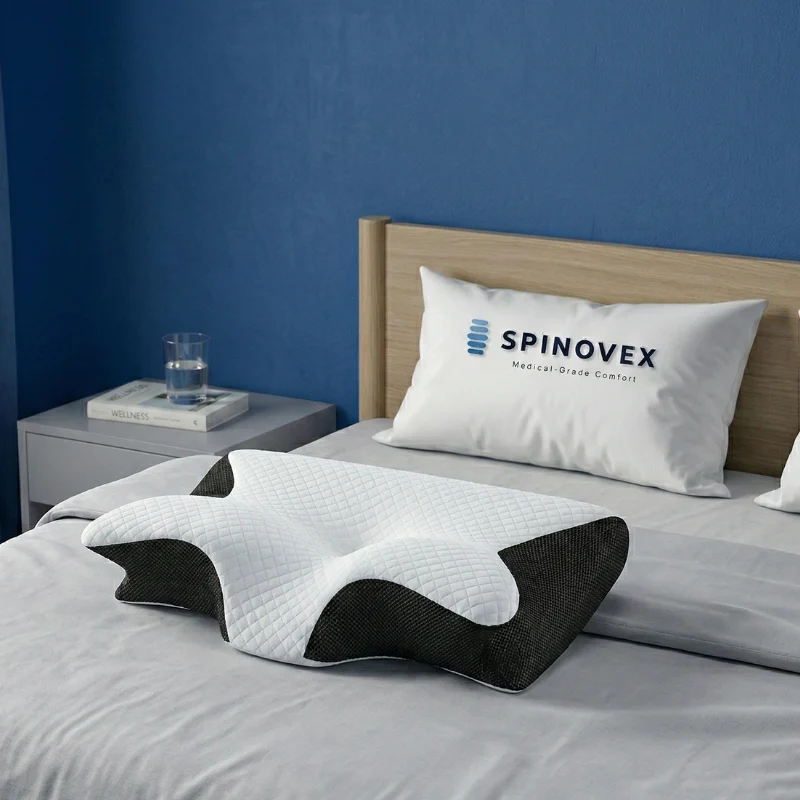
If you already rely on a supportive pillow at home, it’s worth understanding what actually makes one effective — our guide to cervical pillows versus regular pillows breaks down the difference in support, and the same principles apply in miniature to travel pillows. Many people find that the ergonomic contour of something like the Nekrelief Pillow at home, with its side support and center channel, makes them more aware of what good neck support should feel like — which makes it easier to spot (and reject) the flat, floppy travel pillows that don’t actually do the job.
Pack a silk or satin eye mask too. Blocking light helps your brain settle into sleep faster on a plane, where window shades and cabin lighting are rarely in your control. The Silk Eye Mask is also gentle on skin and hair for red-eye flights where you land and go straight into a day of meetings or sightseeing.
Positioning Tricks for Window, Middle, and Aisle Seats
If You’re at the Window
Fold a thin blanket or jacket against the window to soften the hard plastic, then lean your travel pillow against that. This keeps your head from vibrating directly against the wall every time the plane shudders.
If You’re in the Middle
A U-shaped or wrap-style travel pillow works best here, since it gives you support on both sides regardless of which way you tip. Keep your tray table down and rest your forearms on it to take some weight off your neck and shoulders.
If You’re at the Aisle
You have the most freedom to shift position, so alternate between leaning back and leaning slightly forward onto a pillow on the tray table. Changing position every hour or so prevents any single angle from being held long enough to cause real stiffness.
Habits That Protect Your Neck Before and During the Flight
A few small routines make a bigger difference than people expect.
- Stretch before boarding. A couple of minutes of gentle neck rolls and shoulder shrugs at the gate loosens tight muscles before you ask them to sit still for hours.
- Stay hydrated. Dry cabin air contributes to overall muscle tension, so water does more for your comfort than another coffee.
- Avoid falling asleep sitting bolt upright. It feels more “awake,” but it’s actually the position most likely to let your head snap forward or sideways once you drift off.
- Get up and move. On longer flights, a short walk down the aisle every couple of hours keeps your whole spine, not just your neck, from stiffening up.
If your flight involves a connection with real legroom in the lounge or a long layover where you can stretch out across seats, a compact Knee Pillow may help relieve pressure on your lower back and hips, which indirectly helps you settle into a more neutral position overall rather than twisting to get comfortable.
What to Do When You Land With a Stiff Neck
Even with a good setup, you might still land feeling tight — especially after a red-eye. Don’t panic and don’t crack it aggressively. Gentle movement is what actually helps.
Start with slow, small neck rolls and shoulder shrugs once you’re off the plane and have room to move. Our 5-minute morning neck stretch routine was designed for desk workers, but it works just as well for travelers trying to undo hours of awkward positioning. If pain is sharp, radiates down an arm, or doesn’t ease up after a day or two of gentle movement and good sleep, check in with a doctor or physical therapist rather than pushing through it.
Once you’re home, give your neck a proper night of real support instead of another night of compensating. Sleeping on a supportive pillow after a long travel day — rather than whatever flat hotel pillow you ended up with — gives those muscles a better chance to recover.
Frequently Asked Questions
What’s the best position to sleep in on a plane?
Leaning toward a window with head and neck support, or using a wraparound travel pillow in a middle or aisle seat, generally keeps your spine more neutral than sitting fully upright with no support at all.
Why does my neck hurt more after flying than after a normal night’s sleep?
On a plane, your head is unsupported for long stretches and often held in one awkward position by gravity rather than by a pillow designed to keep your spine aligned. The seat angle, lack of space, and dry air add to the tension.
Are inflatable travel pillows as good as memory foam ones?
Inflatable pillows pack small, but they tend to offer less consistent support and can feel firm in some spots and empty in others. A memory foam travel pillow holds its shape better and contours to your neck, though it takes up slightly more luggage space.
Can a travel pillow help with neck pain I already have?
A supportive travel pillow may help relieve added strain during a flight, but it isn’t a treatment for an existing neck condition. If you have ongoing or severe neck pain, talk to a doctor or physical therapist about a plan that fits your situation.
Travel is tiring enough without adding a sore neck to the mix. A little planning — the right seat, the right pillow, a few stretches — goes a long way toward landing feeling like yourself. And if you want the same level of support waiting for you at home, the Nekrelief Pillow comes with a 100-night trial, with free US shipping on orders over $100, so you can settle back in after your trip without any guesswork.
This article is for informational purposes only and is not medical advice. If you experience persistent, severe, or radiating pain or numbness, please consult a healthcare professional.