If you’ve ever woken up with a mouthful of stomach acid, nudged your partner awake with a snore, or noticed your ankles looking a little puffy in the morning, relief might be as simple as the angle you sleep at. A wedge pillow — a solid, triangular pillow that raises your upper body instead of just your head — is one of the simplest tools for easing reflux, snoring, and circulation issues, and it does all three without any pills or gadgets.
Let’s go through how it actually works, where it helps most, and how to use one without waking up with a stiff neck instead.
How a Wedge Pillow Works (It’s Not Just a Stack of Pillows)
A wedge pillow is a firm, angled foam incline, usually somewhere between 6 and 12 inches at its highest point. Instead of bending just your neck forward the way two or three stacked pillows do, it raises your entire upper body — head, neck, and shoulders — as one straight line.
That distinction matters. Stacked pillows tend to crease at the neck, which can leave you stiffer than when you went to bed. A proper incline keeps your spine in a more neutral position while still using gravity to your advantage, which is the whole point when you’re dealing with reflux, snoring, or sluggish circulation.
Wedge Pillows for Acid Reflux
When you lie flat, there’s nothing stopping stomach acid from traveling back up the esophagus. Elevating your upper body uses gravity to help keep acid where it belongs, which is why raising the head of the bed is a commonly suggested approach for nighttime heartburn.
A wedge angled around 6 to 8 inches is typically enough to make a noticeable difference for mild, occasional reflux. If you’re waking up with a burning sensation or a sour taste most nights, it’s worth mentioning to a doctor — a wedge pillow may help relieve occasional symptoms, but it isn’t a substitute for diagnosing or treating GERD.
A few things that help the wedge do its job
- Avoid eating within a few hours of bedtime so there’s less in your stomach to begin with.
- Sleep on your left side on top of the wedge — it keeps the stomach lower than the esophagus.
- Keep the incline consistent; sliding down during the night cancels out the benefit.
Wedge Pillows for Snoring
Snoring often gets worse when you’re flat on your back, because soft tissue in the throat relaxes and partially blocks the airway. Elevating the head and chest can open that airway slightly and ease the vibration that causes snoring for some people.
It’s worth being clear-eyed here: a wedge pillow isn’t a treatment for sleep apnea. If you snore loudly, gasp during sleep, or feel exhausted no matter how long you sleep, that’s a conversation for your doctor, not something to solve with bedding alone. For everyday, garden-variety snoring, though, a wedge combined with side sleeping is a low-effort first step worth trying.
Wedge Pillows for Better Circulation
Circulation issues tend to show up as puffy ankles, heavy-feeling legs, or hands that fall asleep overnight. A wedge used at the foot of the bed — raising the legs above heart level — can support venous return and ease that end-of-day swelling, which is a common recommendation after long days on your feet or during pregnancy. If numbness, tingling, or swelling is persistent, severe, or spreads beyond normal overnight puffiness, it’s worth checking in with a doctor rather than relying on pillow positioning alone.
Circulation in the lower body is also affected by how your hips and knees are aligned while you sleep. Side sleepers who let their top knee drop forward put extra pressure on the hip and can restrict blood flow through the night, which is part of why a knee pillow is worth adding for side sleepers who already use a wedge for their upper body.
If lower back pain is part of the picture too, the way you position your hips and knees matters just as much as the incline — our guide to the best sleeping positions for lower back pain covers how to combine elevation with proper spinal support.
Getting the Most Out of Your Wedge Pillow
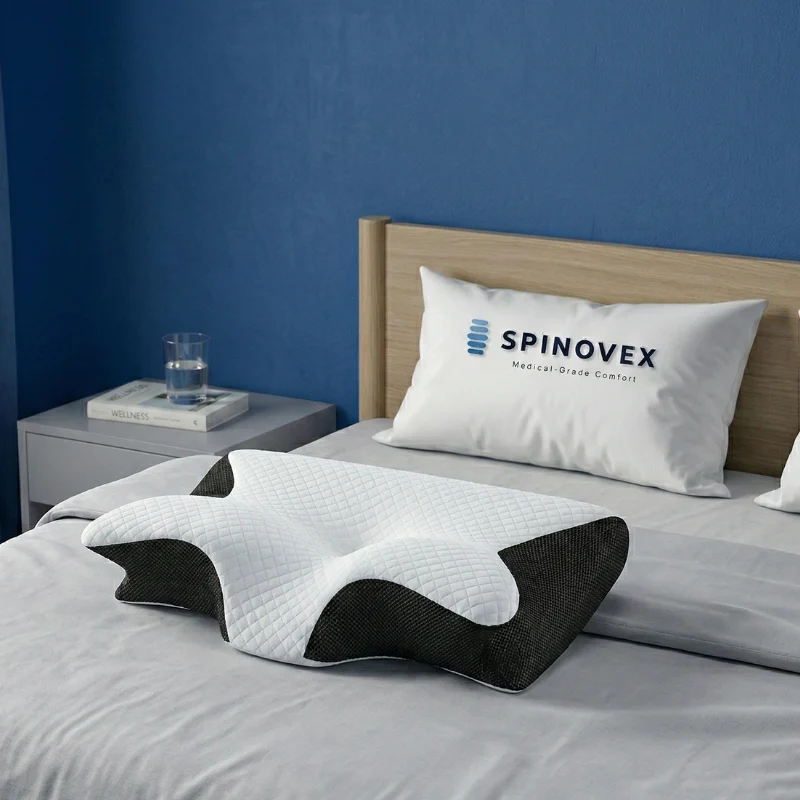
A wedge pillow handles the incline, but your neck still needs its own support on top of it — otherwise your head can tip forward or sideways even while your torso is properly elevated. This is where a contoured pillow designed for neck alignment earns its keep. Our Nekrelief Pillow is built to cradle the neck’s natural curve, so you can pair it on top of a wedge without losing the support that keeps you from waking up stiff.
For side sleepers using a wedge, our Knee Pillow keeps the hips level and takes pressure off the lower back and legs, which works hand in hand with better circulation. And since elevated sleep often means a brighter, more upright field of view, a silk eye mask can help block out light without tugging on your eyelashes or skin the way synthetic masks do.
Every Spinovex pillow comes with a 100-night trial so you have time to see how it feels once you’ve adjusted, and orders over $100 ship free within the US.
Frequently Asked Questions
What angle should a wedge pillow be for acid reflux?
Most people find relief somewhere between 6 and 8 inches of elevation. Going higher isn’t necessarily better — too steep an angle can cause you to slide down during the night, which defeats the purpose.
Can a wedge pillow help with sleep apnea?
A wedge pillow may ease mild positional snoring, but it isn’t a treatment for sleep apnea. If you suspect apnea, talk to a doctor about proper diagnosis and treatment rather than relying on pillow positioning alone.
Is it safe to sleep on a wedge pillow every night?
For most healthy adults, yes. Elevated sleep is a commonly used approach for reflux and mild snoring, though it isn’t a treatment for either on its own. If you have a specific medical condition, it’s always worth checking with your doctor first.
Can a wedge pillow help with back or hip pain too?
It can, depending on how you use it. Placed under the knees while lying on your back, a wedge can take pressure off the lower spine. Combined with proper hip alignment on your side, it supports better circulation and less morning stiffness overall.
A wedge pillow is a small change that may offer a wide range of benefits — easier breathing, calmer digestion, and legs that feel less heavy by morning. Pair it with a pillow designed to support your neck, like the Nekrelief, for support from head to hips. Browse the full lineup and try it with our 100-night trial.
This article is for informational purposes only and is not medical advice. If you experience persistent, severe, or radiating pain or numbness, please consult a healthcare professional.